

The Real Plague Knights The Order of St. Lazarus
Written by Gabriel Garcia
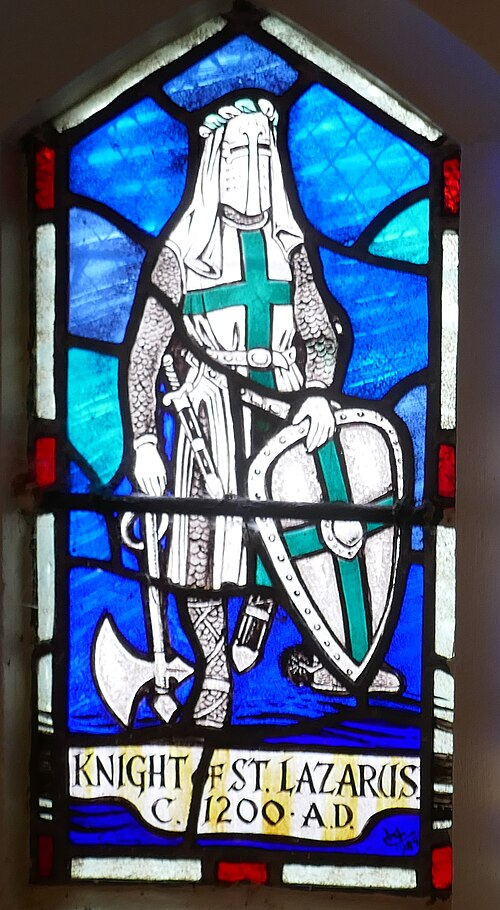
Cursed yet chosen, a band of green-robed knights strides resolutely across parched plains, their disease-ridden bodies bearing the weight of their calling. The blazing sun beats down as they face death without fear. Their destinies were sealed long ago. Now, fueled solely by unwavering faith, they seek one thing in the forthcoming battle: a redemptive release from their suffering, embracing the glory that comes with a martyr's death. With fierce determination, they charge headlong into enemy lines.
It is the year 1244, and the battle unfolds in Herbia. The fate of the Holy Land hangs precariously in the balance after a century and a half of relentless crusading. Among the knightly orders fighting for the kingdom of Jerusalem stand the fated men of the house of St. Lazarus. For the past hundred years, they have undertaken a sacred yet challenging mission: caring for the sick and the leprous while grappling with the social stigma attached to their work. Embracing society's outcasts, they alleviate suffering and restore a sense of purpose.
Backed by the papacy and European monarchs, they established hospitals and colonies, broadening the reach of their compassionate care. In the waning days of the crusader states, they were called upon to defend the cross. Now, they carry forward their legacy of devotion and sacrifice onto the battlefield. This is the story of the leper knights of St. Lazarus, from their humble beginnings to their ultimate sacrifice and resurrection.
The First Crusade, which began in 1096, marked the start of significant violence in the Middle East, justified by its leaders as a defense of the Christian faith. In 1099, the Crusaders successfully captured Jerusalem and established several crusader states; however, the safety of Christian pilgrims remained a serious concern. Due to limited manpower and resources, the rulers of these territories often prioritized territorial expansion over stability, leading to a rise in banditry by the 1110s and hazardous conditions for travelers.
In response to these dangers, the monks at the Hospital of St. John in Jerusalem sought independence in 1112, leading to the formation of the Order of the Knights Hospitaller, which was dedicated to protecting pilgrims. Shortly thereafter, the Knights Templar emerged as a more militant organization, gaining recognition from King Baldwin II in 1119 and later from the Catholic Church in 1129, with a mission to secure travel routes. Other military orders developed within Christendom, each focusing on specific aspects of defense and care. For instance, the Order of the Holy Sepulchre was established to safeguard holy sites, while the Order of St. Lazarus focused on providing medical care to individuals with leprosy.
Leprosy is a long-lasting infectious disease caused by the germ Mycobacterium leprae. If left untreated, it can damage the skin and nerves over time. This damage can lead to a loss of touch and fine motor skills. It can also cause a severe rash over the entire body and may eventually affect vision and mobility. Leprosy reduces the ability to feel pain, making it hard for people to notice wounds or other health issues. As a result, individuals with leprosy might not seek treatment for serious injuries or diseases.
Leprosy is now treatable with antibiotics, but in medieval times, doctors could only alleviate symptoms while patients suffered and often died from other illnesses. Attitudes towards leprosy were polarized: some viewed it as a curse and were repulsed by the afflicted, while others drew on the New Testament for a more compassionate perspective. For example, the parable of Lazarus in the Gospel of Luke highlights the beggar as deserving of heaven, and the Gospel of John tells of Jesus healing Lazarus, suggesting leprosy could be seen as a mark of the chosen. Those who cared for lepers were seen as following Christ's example.
While leprosy is quite rare today, it was once endemic in the Eastern Mediterranean. Unfortunately, its chronic and progressive symptoms required specialized care that most medieval hospitals were not equipped to provide. Furthermore, many were unwilling to live or be treated alongside lepers. For these reasons, lepers were usually sent to specific hospitals or colonies where they could receive the care they needed without risk to the wider public and where they could be kept out of sight and out of mind.
In the 11th or early 12th century, the Knights Hospitaller founded a hospital outside the St. Lazarus Gate in Jerusalem, marking the Order of St. Lazarus's origins. This organization evolved into a distinct Order that adopted a monastic rule inspired by St. Augustine, yet it diverged from the militaristic paths of many of its contemporary counterparts. Its primary focus was on the care of lepers, and its prominence grew significantly when King Folco granted them additional land in 1142. The Order's reputation flourished during the reign of Baldwin IV, often referred to as the leper king, leading to increased donations while they maintained their commitment to non-military healthcare.
The situation changed dramatically after Saladin's conquest of Jerusalem in 1187, forcing the Order to abandon the city and relocate to Acre. With the onset of the Third Crusade, the Crusaders found themselves short of manpower, prompting the Order of St. Lazarus to take part in military efforts for the first time, despite its earlier emphasis on healthcare.
After all, a knight with leprosy was still a knight. These knights, known as lazerites or lazars, equipped themselves with standard knightly gear. Mounted mainly on horseback, they rode in high saddles with supports both before and behind them, securing their feet in stirrups. This setup allowed cavalrymen to remain firmly in their saddles during swift charges. Their armor was typical for knights of the time, consisting of padded garments, a coif for head protection, a gambeson for the torso, and protective footwear for their legs. For defense, most of the foot soldiers donned chest armor, and over their chainmail they wore mantles identifying them as members of the Order of St. Lazarus.
During the 13th century, when the Order fielded troops, some basic plate armor was being adopted to protect the shins and joints. Their primary weapon on horseback was the lance, while their secondary weapon was a sword. Beyond that, knights equipped themselves according to personal preference. Some preferred long swords, others a poleaxe, others still liked the short sword and shield, or perhaps a two-handed axe. It was up to them. However, due to the muscle weakness that can come with leprosy, most knights would likely have preferred to fight with lighter and well-balanced weapons like short swords.
The Order of St. Lazarus is recognized for its distinctive green cross, with early references to its heraldic use documented in regulations by Sief Freed von Schlatt, approximately 90 years after the Order's militarization. Originally an offshoot of the Knights Hospitaler, the Order adopted hospital heraldry before establishing its unique emblem to set itself apart.
The military units of the Order of St. Lazarus were likely small, as indicated by their infrequent mentions in historical battle accounts. These units, potentially referred to as "banners," were led by a "knight banner." For example, during the 7th Crusade, French Lord John of Joinville was noted to have brought only 10 knights, whereas larger lords typically commanded about 40 to 50 knights. The Knights of St. Lazarus often faced ostracism due to their association with leprosy and were described by Joinville in 1252 as irregular troops lacking a formal position in the army.
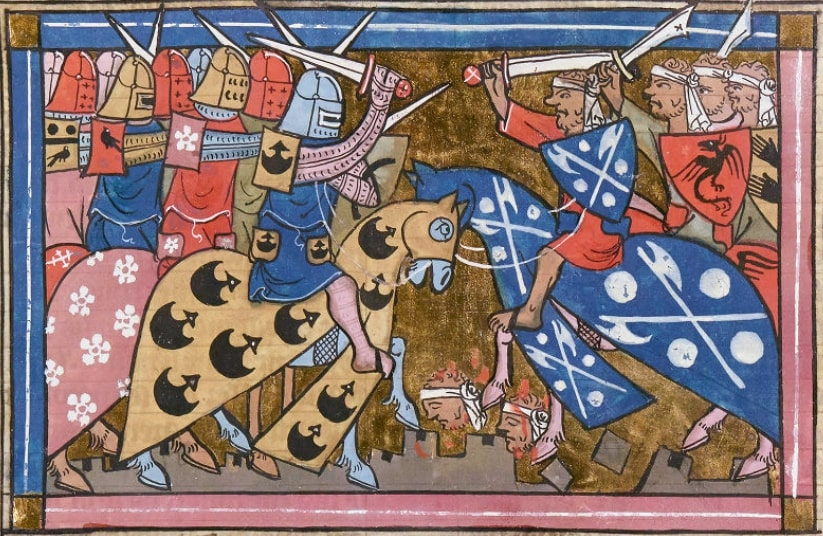
Louis VII,who came to aid Baldwin III of Jerusalem, against the Saracens,12th century - Wikimedia Commons
Training for the Knights typically stemmed from prior military experience. In the early 13th century, it was common practice for the Knights Templar and those in Jerusalem to include individuals who were developing leprosy in their ranks. This initiative primarily aimed to assist these knights in coping with their condition rather than providing intensive military training. Nonetheless, some managed to adapt their combat skills despite their physical limitations.
Their tactics in battle paralleled those of other knightly orders, involving formation marching and lance charges. However, the Knights of St. Lazarus often engaged in risky manoeuvers, at times pursuing actions that they knew could lead to death, reflecting a mindset that saw martyrdom as significant. Historian Helen Nicholson characterized this behaviour as "suicidally reckless," noting that the mission of these knights extended beyond mere battlefield victories.
Historical records indicate that the Knights of St. Lazarus trace their origins to the early 13th century, with a formal military branch established by 1227. However, by 1234, the Order found itself grappling with financial difficulties, and in October 1244, it participated in its first recorded battle at Forbi. This encounter was noteworthy for uniting a diverse array of forces, including crusaders, Muslims, and Bedouins, marking a significant chapter in the Order's history. Following the battle, a letter from patriarch Robert of Jerusalem lamented the heavy toll taken on the knightly orders, revealing that only 33 Templars, 27 Hospitalers, and three Teutonic Knights had survived. The defeat at Forbi spurred King Louis IX of France to initiate the Seventh Crusade, during which the Order of St. Lazarus sought to revitalize its military unit by recruiting new members, including lepers and less able-bodied knights, as they advanced towards Cairo. Unfortunately, their contributions during the campaign were minimal and largely overlooked in historical accounts.
Although the crusade initially showed promise, it ended in disaster near Mansura due to an ambush. The only reference to the Knights of St. Lazarus from this campaign appeared in the writings of chronicler Matthew Paris, who noted their participation in the larger Christian defeat and the subsequent capture of King Louis IX. Later, King Louis, along with 12,000 prisoners, was ransomed, while John of Joinville chronicled efforts to strengthen the crusader states. The Order of St. Lazarus attempted a cattle raid, but this initiative resulted in severe losses due to an ambush. In response to the ongoing challenges, Pope Innocent IV allowed non-leprous knights to join the Order after they faced heavy casualties.
The decline of the Order of St. Lazarus began after the fall of Acre in 1291, yet it continued to exist in Europe primarily for medical purposes. In 1489, it merged with the Knights Hospitaler to face the growing Ottoman threat, with their independent activities lingering in France and Italy until 1564, when the Italian Lazarites were commanded to combat piracy. This led to their merger with the Order of St. Maurice in 1572, forming the Order of St. Maurice and Lazarus, a group focused on naval defense and anti-piracy efforts.
Inspired by their Italian counterparts, the French Lazarites proposed merging with another military order to establish the Order of Our Lady of Mount Carmel and St. Lazarus during the Anglo-French War of 1666 to tackle piracy. Although these merged orders still exist today, they have transitioned into humanitarian organizations, returning to their foundational mission of care.
The Knights of St. Lazarus, while not as prominent as other Crusader orders such as the Templars or Hospitallers, hold an important place in medieval history. This chivalric order was established in the 12th century with the primary goal of providing support and care for knights returning from the Crusades who had been affected by leprosy. Members of the order were required to take vows that emphasized both combat skills and a deep commitment to the spiritual and physical well-being of those in their care.
One notable contribution of the Knights of St. Lazarus was the advancement of agricultural techniques to enhance living conditions in leper colonies. They introduced sustainable farming methods that not only supplied food for the communities they served but also helped individuals regain a sense of independence and dignity. Furthermore, the order provided its members with thorough self-defense training, ensuring they could protect themselves and the vulnerable populations they assisted.
In addition to their support for leper colonies, the Knights of St. Lazarus extended their hospitality to pilgrims in the Holy Land, establishing hospices and safe houses that provided essential services during the challenging periods of the Crusades.
Although the order's influence and prominence waned following the decline of the Crusading era, the fundamental values they represented—compassion, dignity, and service—remain relevant today. In 1962, a modern charitable organization was established to honor the legacy of the Knights of St. Lazarus, underscoring the enduring importance of serving and caring for those in need and reflecting the order's historical commitment to the most marginalized and vulnerable members of society.
Sources/Further reading:
OpenLibrary.org. 2025. “Leper Knights by David Marcombe | Open Library.” Open Library. 2025 https://openlibrary.org/books/OL3577620M/Leper_knights.
Ellul, Max J, and Tim Wallace-Murphy. 2011. The Sword and the Green Cross: The Saga of the Knights of Saint Lazarus from the Crusades to the 21st Century. Bloomington, In: Authorhouse.
Archer, Thomas Andrew, and Charles Lethbridge Kingsford. 1914. The Crusades.